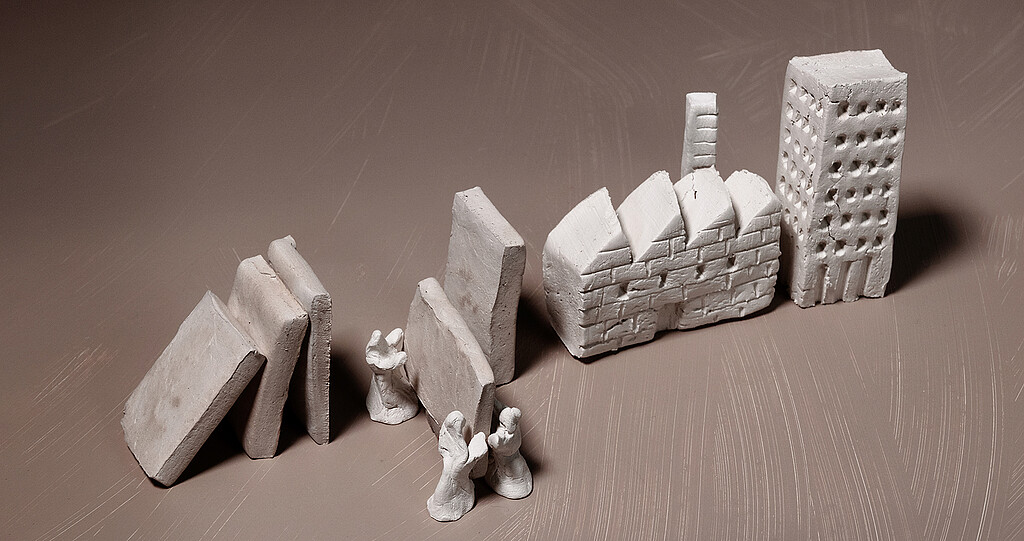
Several small clay figures stand in front of a row of clay models representing buildings and walls.

From natural hazards to risks

People in Switzerland are exposed to various natural hazards and and there is no such thing as complete security. The strategy for dealing with risks from natural hazards aims to promote a deliberate risk culture that is able to avoid and mitigate damage – or to bear it as a community in cases where reasonable efforts fail. This requires integrated risk management as well as dialogue with those affected and those bearing responsibility.


You can find current warnings on the Natural Hazards Portal
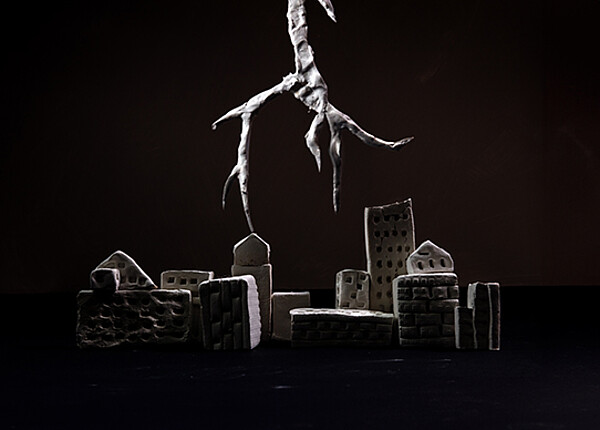
Artistic scene depicting a miniature city made of dark material, with a branching, lightning-like structure descending from above.

Lightning

Clay figure crouches under a table with broken clay vases on top, symbolizing earthquake protection.

Earthquake

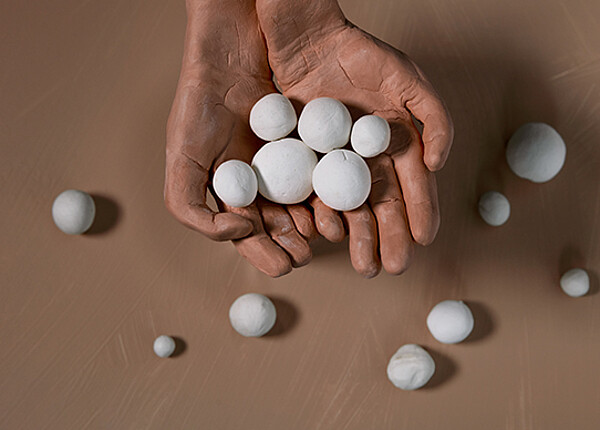
Two hands holding several hailstones of varying sizes, with more scattered on a brown surface.

Hail

Melted red popsicle with a white Swiss cross on a smooth surface.

Heat

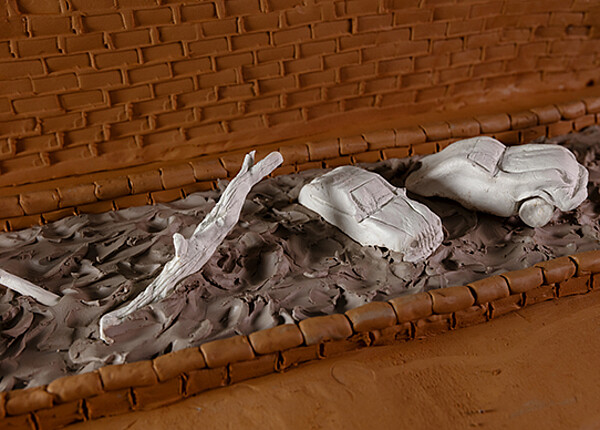
Clay model depicts two cars stuck in muddy floodwater between brick walls.

Flood

Snow deposit from an avalanche on a slope, held back by a wooden avalanche protection structure.

Avalanches

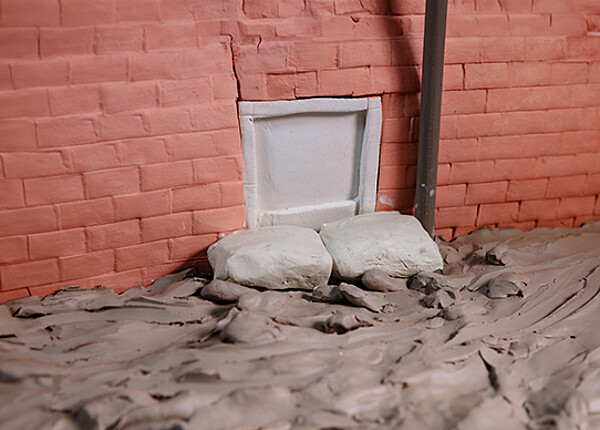
Wall with a small white window, two large stones in front, a gray downspout, and muddy ground around.

Surface runoff

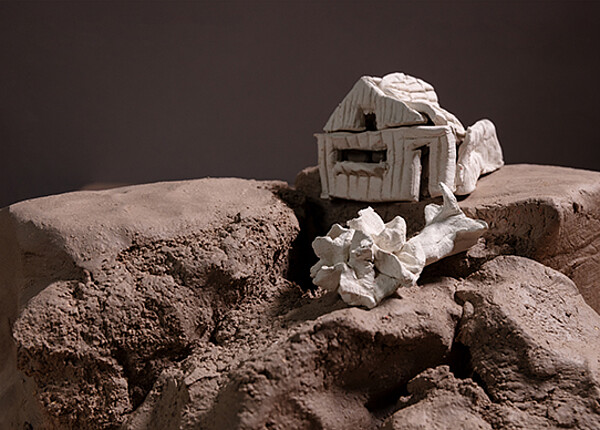
Model of a landslide showing a small house and a broken tree on eroded clay soil.

Landslide

Sculpture made of white material depicting tangled, branched twigs or roots on an uneven surface.

Storm

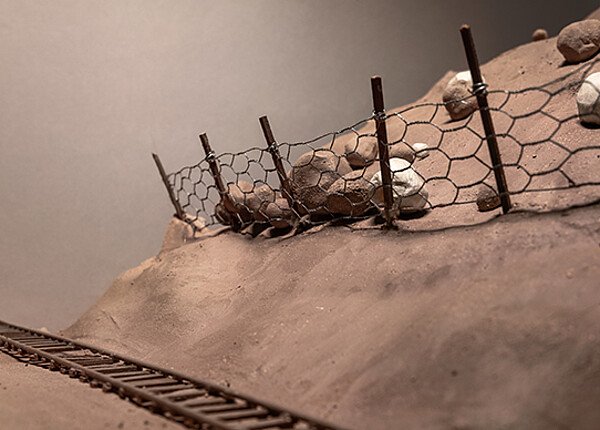
Model of a slope with wire mesh fence holding back rocks next to a railway track.

Falling processes

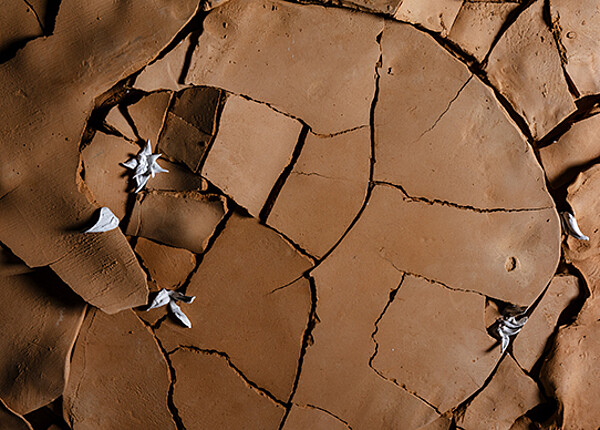
Dry cracked earth with several small white flowers scattered on it

Dryness

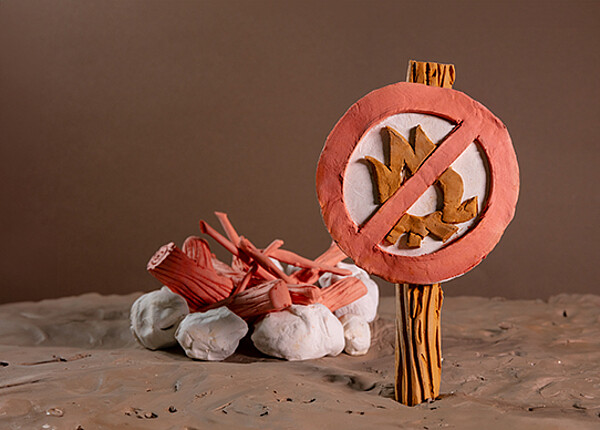
Clay model showing a campfire made of logs and stones next to a prohibition sign with a crossed-out flame symbol indicating forest fire danger

Forest fire

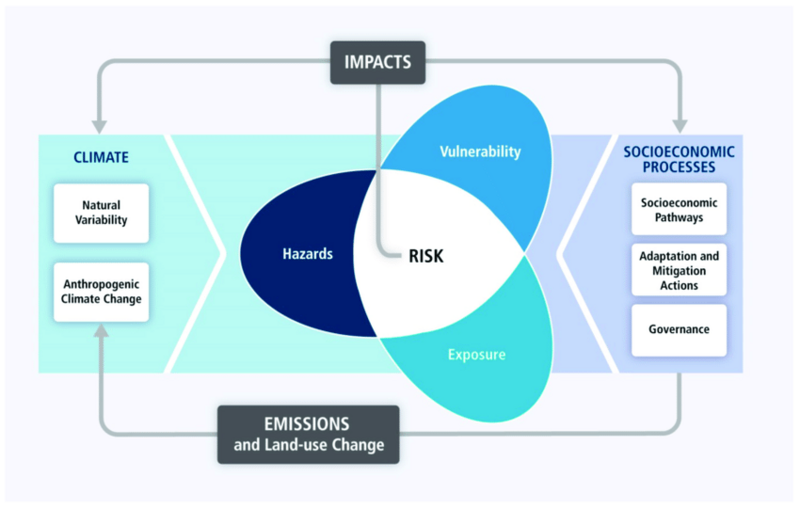
Danger and risk

Danger is not the same as risk

Many hazards are visualised in hazard maps: these show how often the hazard can occur and with what intensity. You can find the hazard map for gravitational natural hazards.


If hazards, such as a natural hazard event such as an earthquake, hit people, buildings or transport routes, damage can occur. This is referred to as a risk. 


Climate change

Settlement development and climate change

Risks are changing: settlement development and increasing utilisation density are increasing the risks from natural hazards. In addition, the frequency and intensity of events in Switzerland, such as heatwaves, droughts and heavy rainfall, are increasing as a result of climate change.


Settlement development and increasing utilisation density increase the risks from natural hazards.


Cascade of natural hazards

Natural hazards can occur in a chain.


Cascade of natural hazards

Natural hazards can occur in a chain, as the example of Piz Cengalo shows: The debris from the Piz Cengalo landslide in August 2017 quickly mixed with water and flowed as a debris flow into the village of Bergell. Or: Heatwaves lead to increased evaporation and greater drying out of the soil. The dry soils cause the air to heat up even more.


Indirect damage

High sums for indirect damage

When damage totals are published after events such as floods or storms, indirect damage is usually not included: This includes, for example, the time it takes to restore the power and water supply, get machinery back up and running or make rooms usable again.
 

If people are injured, made ill or have their performance impaired by natural hazards, this also causes costs that are often not included in the estimates. Seen in this light, the total damage can be many times higher.

More information on fatalities and damage

Sendai Framework for Disaster Risk Reduction - Country data:


WSL database deaths:


FOEN, Climate indicator:


WSL storm damage database:

Last change: 09.12.2025